How to Deal with Burnout and Reclaim Your Balance in Mississippi
Dealing with burnout isn't about "powering through." It starts with recognizing the subtle, nagging signs before they completely take over.
This is about understanding that you're not just stressed—you're dealing with a state of profound emotional, physical, and mental exhaustion. And it requires a real plan to overcome.
Know the Warning Signs of Burnout
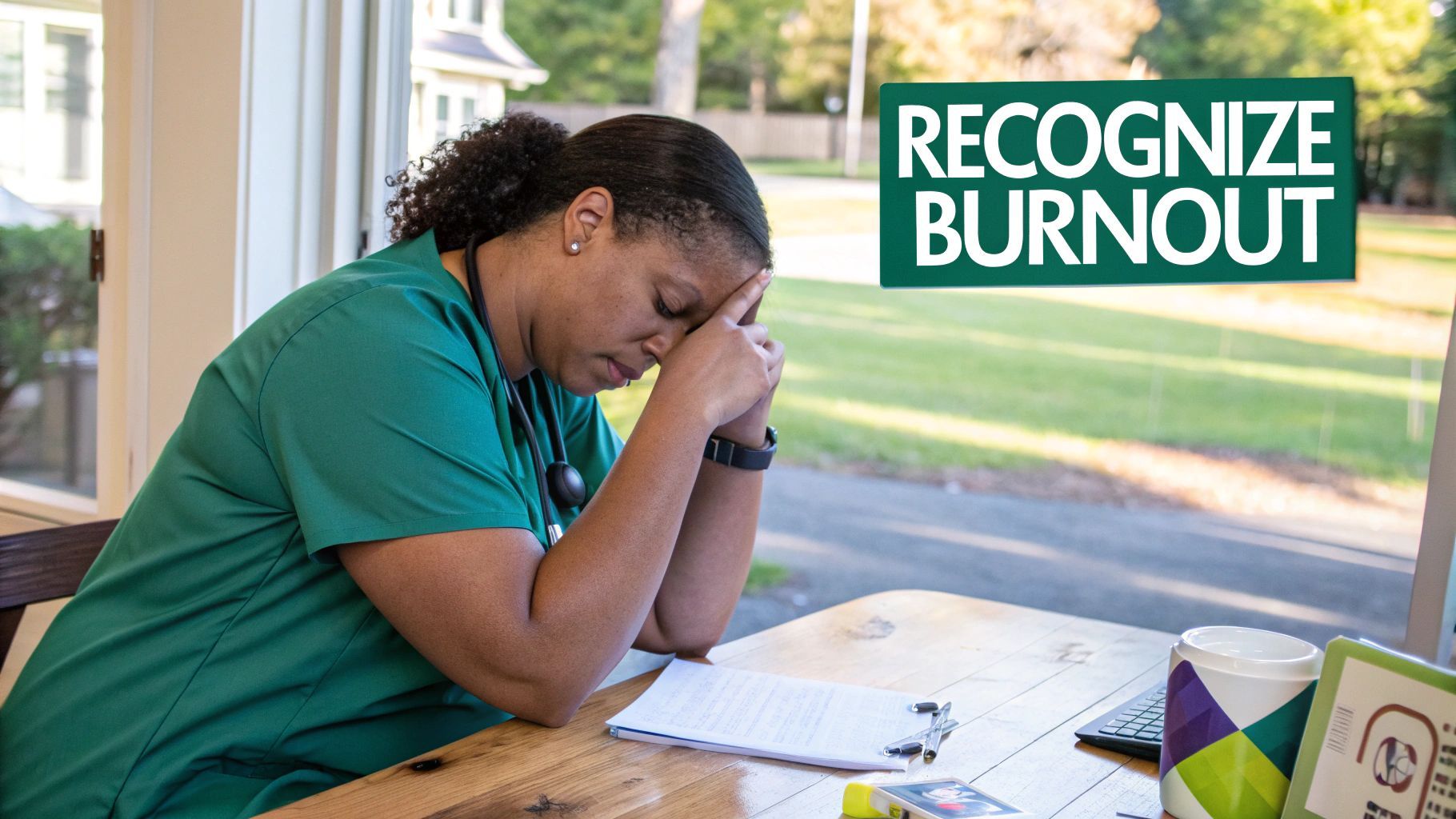
Before you can fight back, you have to see burnout for what it truly is. It's not just feeling tired after a long week. It’s that deep, creeping exhaustion that makes even the smallest tasks feel like climbing a mountain. This is a serious response to long-term, unresolved stress, and it can disrupt every part of your life.
Here in Mississippi, many of us face unique pressures that can push us to the brink. Think of a small business owner in Starkville trying to juggle inventory, payroll, and customer service seven days a week. Or a nurse in Jackson working back-to-back shifts, carrying the immense weight of patient care. In these all-too-common scenarios, the line between dedication and total depletion gets dangerously thin.
The Three Core Signs of Burnout
Burnout usually shows up as a combination of three key symptoms. They feed off each other, creating a cycle of exhaustion and disillusionment. Spotting them in yourself is the first real step toward getting back on track.
- Overwhelming Exhaustion: This is more than just physical tiredness. It's a deep, draining fatigue that a good night's sleep can't fix, leaving you with zero energy for work or your personal life.
- Feelings of Cynicism and Detachment: You might start to feel disconnected from your job, your colleagues, or even your own sense of purpose. A cloud of negativity or irritability can take over, making it impossible to feel good about your accomplishments.
- A Sense of Ineffectiveness: This is that sinking feeling that you're just not good at your job anymore. Your productivity plummets, you start making mistakes, and you begin to doubt your own skills, no matter how capable you've always been.
These three signs are deeply connected. For instance, feeling ineffective fuels your cynicism, which in turn makes the exhaustion even worse. Understanding these signs of workplace burnout is the only way to break the cycle.
Burnout Self-Assessment Checklist
Sometimes, seeing the symptoms laid out can help you connect the dots. Use this quick checklist to see if what you're feeling lines up with the classic signs of burnout.
| Symptom Category | Common Signs to Watch For |
|---|---|
| Physical Symptoms | Persistent fatigue, headaches, stomach issues, changes in sleep patterns, feeling run-down constantly |
| Emotional Symptoms | Feeling cynical, irritable, detached, helpless, or trapped; loss of motivation and a sense of dread |
| Behavioral Signs | Withdrawing from responsibilities, isolating yourself, procrastinating, using unhealthy coping mechanisms |
| Work Performance | Decreased productivity, lack of concentration, making more mistakes, feeling no satisfaction from your job |
This checklist isn't a formal diagnosis, but if you're ticking several boxes, it’s a strong signal that you need to take these feelings seriously.
This Isn't Just You—It's a Widespread Issue
If you're feeling this way, you are far from alone. Burnout has become a global issue, hitting people in every industry and role imaginable. The latest data paints a pretty stark picture.
A major global survey found that 38.1% of workers reported struggling with burnout. For those most affected, their overall well-being plummeted by over 50% , and they were more than 50% more likely to see their productivity drop.
The research also showed that younger workers, especially those between 18 and 24 , were hit the hardest, with a burnout rate of 47% . It’s also clear that no single work setup is a magic bullet—both full-time office and remote workers reported high rates of burnout.
For Mississippians looking for ways to manage these intense symptoms, a comprehensive wellness plan is key. After a thorough consultation with a healthcare provider, some individuals find that therapies like medically supervised marijuana can help manage the anxiety and insomnia that so often go hand-in-hand with severe burnout. This isn't a standalone fix, but for some, it can be a valuable tool for restoring balance and finding much-needed relief.
Immediate Actions to Reduce Stress and Overwhelm
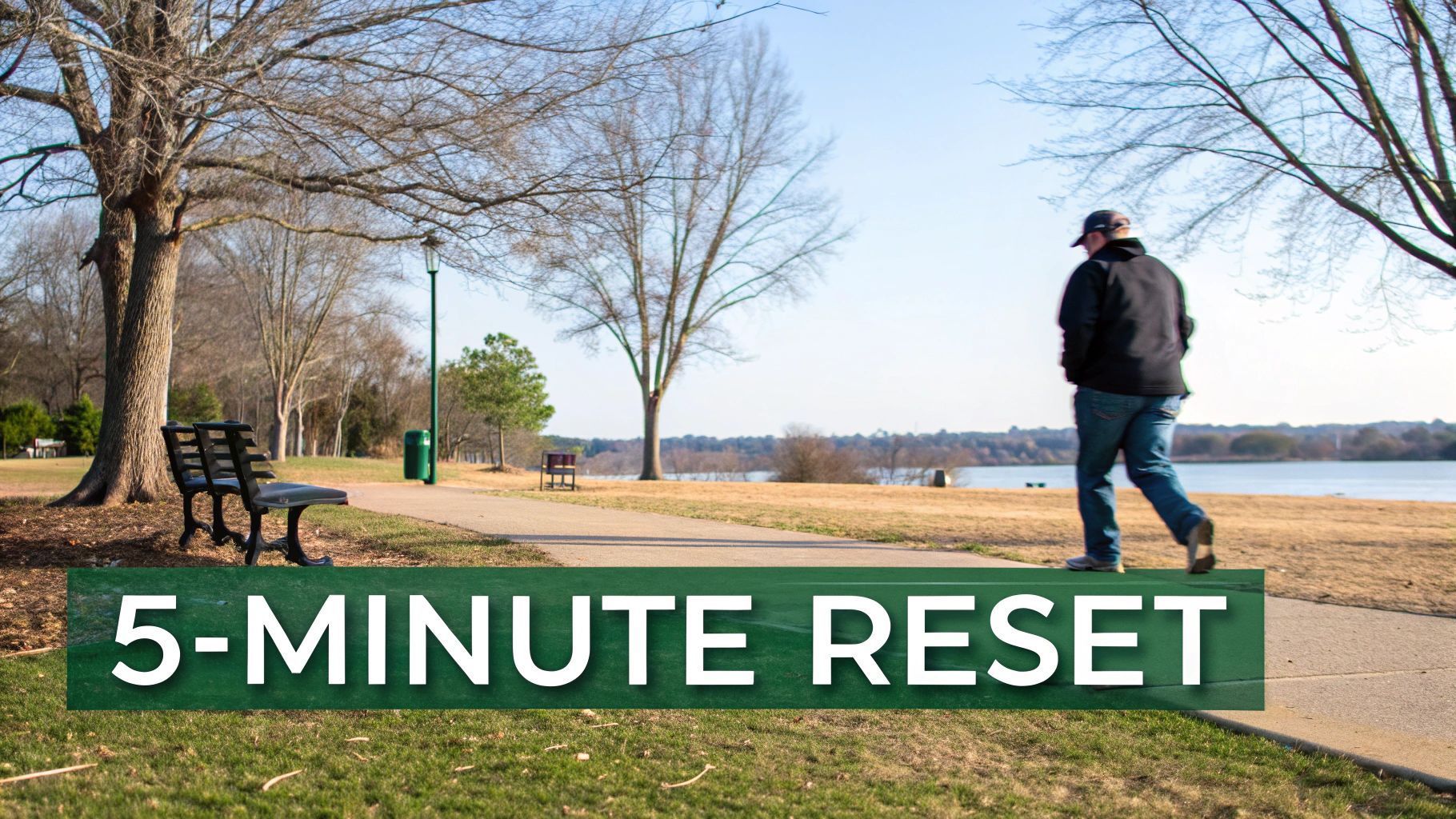
When you're completely underwater with burnout, the thought of making huge, life-altering changes feels like a cruel joke. It’s just not possible. The trick is to forget the big picture for a moment and start small.
This isn’t about a massive life overhaul overnight. It’s about taking tiny, practical steps to carve out some breathing room right now. These small, consistent actions stop the downward spiral and give you back a small—but critical—sense of control when everything feels like it’s spinning.
Introduce the 5-Minute Reset
One of the best tools for instantly calming the nervous system is something called the "5-Minute Reset." It’s incredibly simple, and you can do it pretty much anywhere.
Picture this: you're at your desk, your chest is tight, and the emails just keep piling up. Instead of gritting your teeth and pushing through, you stop. For just five minutes, you step away. Walk to a window, sit in your car, find an empty office—it doesn't matter where.
Then, you just focus on your breathing.
- Inhale slowly to a count of four.
- Hold it for a count of four.
- Exhale slowly to a count of six.
- Repeat this for the full five minutes.
This simple breathing exercise physically lowers your heart rate and breaks the stress cycle, giving your mind a moment of much-needed clarity. Think of it as hitting the pause button on your anxiety.
Practice Tactical Disengagement
Another strategy you can use immediately is tactical disengagement . It sounds fancy, but it just means creating firm, clear boundaries between work and the rest of your life, especially with technology. Those constant dings and notifications from your phone keep your brain in a state of high alert, making it impossible to ever truly rest.
Tactical disengagement isn't about ditching your responsibilities. It’s about protecting your energy so you can actually show up when it counts. This is a non-negotiable skill for anyone figuring out how to deal with burnout.
A great first step is to turn off work email and chat notifications on your phone after a set time. Maybe after 6 PM , your phone is for you, not your job. This tiny act reclaims your evenings and gives your brain permission to finally switch off. It sends a clear signal that the workday has an end point.
Find Your Mississippi Moment of Calm
Your environment has a huge impact on your stress levels. Here in Mississippi, we’re lucky to be surrounded by natural beauty that can be a powerful antidote to burnout. You don't need a week-long vacation; you just need a few minutes in a different setting.
Consider these simple, local resets:
- Take a quick, brisk walk at a nearby park like Shepard State Park in Gautier or Tishomingo State Park.
- Find a quiet bench along the Natchez Trace Parkway and just watch the world go by for a bit.
- Sit on your own front porch with a glass of sweet tea and no phone for ten minutes.
These aren't life-changing events. They are small, intentional moments of peace meant to break the cycle of chronic stress. This is a core part of learning how to manage stress before it becomes full-blown burnout. By weaving these little pauses into your day, you start building a real foundation for recovery.
For some people in Mississippi with qualifying conditions, a medical marijuana card can be part of a larger, medically supervised wellness plan. Certain strains of marijuana are known for promoting relaxation and easing anxiety, which can be incredibly helpful when you're dealing with the intense symptoms of burnout. When used responsibly under a healthcare provider's guidance, it can be a useful tool for quieting an overactive mind and finding the restorative rest you desperately need.
Building Sustainable Habits for Long-Term Recovery

Quick fixes can give you some breathing room when you're at your limit, but the real road to recovery is paved with small, consistent habits. To move from just surviving to actually thriving, you need to build routines that protect your energy and mental health every single day.
This isn’t about some massive, life-altering overhaul. Think of it as making small, daily investments in your own well-being. By focusing on the fundamentals—sleep, nutrition, movement, and boundaries—you start building a foundation strong enough to handle life's pressures, especially here in Mississippi.
Prioritize Restorative Sleep
Burnout absolutely wrecks your sleep. It’s a vicious cycle: you're too stressed and wired to fall asleep, but then you're too exhausted to function the next day, which just piles on more stress. Making sleep a non-negotiable priority is one of the most powerful things you can do.
Start with a simple "shutdown routine" about an hour before you want to be asleep. Put the phone away. Turn off the bright overhead lights. Maybe you read a book (a real one, not on a screen) or listen to some calm music. These simple cues tell your brain it’s time to wind down, making it easier to drift off and stay asleep.
Poor sleep isn't just a symptom of burnout; it's also a major cause. When you make sleep hygiene a priority, you're directly tackling the physical exhaustion that fuels the entire cycle.
Make Mindful Nutrition Choices
When you're running on fumes, it’s all too easy to grab whatever is fast and convenient. But those sugary snacks and processed meals that give you a quick jolt often lead to a hard crash later, making brain fog and fatigue even worse.
You don't need a perfect diet. Just focus on adding one good thing at a time. Maybe that’s starting your day with a protein-heavy breakfast to keep your blood sugar stable, or packing a healthy lunch so you're not tempted by the office vending machine. For those of us in Mississippi with demanding jobs and long commutes, prepping a few meals on Sunday can be a total game-changer.
Incorporate Gentle Movement
Hitting the gym for an intense workout probably sounds impossible right now, and that's okay. The goal isn't to train for a marathon. It's just to move your body in a way that feels good and helps release some of that built-up tension.
- A 15-minute morning walk: Getting outside before the day goes crazy can clear your head and give you a dose of natural light, which helps reset your internal clock.
- Simple stretching: Every hour, just stand up from your desk for five minutes and stretch. It does wonders for the tension we all hold in our necks and shoulders.
- Weekend activity: Find something you actually enjoy. A walk at a local park, a little time in the garden—it should feel restorative, not like another task on your to-do list.
Set and Protect Your Boundaries
This might be the most important piece of the puzzle. Burnout thrives where boundaries are weak or nonexistent. Learning to say "no" and protect your time and energy is absolutely critical for long-term recovery.
Start small. Block off "non-negotiable" time for yourself in your calendar. It could be 30 minutes to read, an hour for a hobby, whatever you need. Treat that appointment with the same importance as a meeting with your boss.
Communicating those boundaries is the next step. It can feel awkward at first, but a simple and respectful, "I'm offline after 7 PM, but I'll get back to you first thing in the morning," sets a clear and healthy expectation. If you struggle with this, exploring cognitive behavioral therapy techniques can give you practical tools to communicate your needs with more confidence.
How an Integrated Wellness Approach Can Help
Recovering from burnout isn't just about managing stress. It demands a much deeper look at how that chronic stress has impacted your entire well-being—mind and body. When you're trapped in that state of total exhaustion, it's not just in your head. Your body feels it too, often showing up as chronic pain, terrible sleep, or even struggles with weight.
A true wellness plan has to look at the whole picture. It's about combining practical strategies like setting boundaries and mindfulness with supportive medical care that actually addresses the physical mess burnout leaves behind. Your mental and physical health are completely intertwined; you can't heal one without supporting the other.
The Physical Toll of Mental Exhaustion
The chronic stress that fuels burnout isn't just an emotional weight. It keeps your body locked in a "fight or flight" mode, pumping out stress hormones like cortisol. Over time, being on high alert like that has serious physical consequences.
Many people deep in burnout report a spike in physical symptoms. It often looks like this:
- Heightened Pain Perception: Stress can make existing chronic pain feel so much worse. It can also create new problems, like constant tension headaches or muscle soreness that never seems to go away.
- Insomnia and Disrupted Sleep: A mind that won't shut off makes it impossible to get the deep, restorative sleep you desperately need. This creates a vicious cycle of fatigue that just drains you day after day.
- Increased Anxiety: That constant feeling of being overwhelmed often turns into a persistent, humming anxiety, making it hard to ever truly relax or feel at ease.
These aren't just minor side effects; they are core parts of the burnout experience. Any recovery plan that's going to work has to tackle them head-on.
Considering Medical Marijuana in a Supervised Plan
For many Mississippians struggling with these severe symptoms of burnout, a medical marijuana card can be a game-changing part of a medically supervised wellness plan. When used responsibly and under the guidance of a knowledgeable healthcare provider, medical marijuana can offer real relief for some of burnout's most difficult symptoms.
Let's be clear: this isn't about self-medicating. It’s about working with a provider to see if this is the right tool for your specific symptoms, especially for things like debilitating anxiety or insomnia that haven't responded to anything else. The goal is to use it as a tool to help restore some balance, giving you the rest and relief you need to actually engage with other recovery strategies.
Burnout isn't a personal failure. It’s a systemic problem with profound personal consequences. A recent U.S. survey found that 69% of full-time workers felt burned out, with a staggering 71% saying it directly harmed their work performance. You can dig into these powerful burnout statistics and their impact on job satisfaction to see just how widespread this is.
Accessing Care in Mississippi
Trying to figure out how to climb out of burnout is hard enough without navigating a complicated medical system. Thankfully, getting support right here in Mississippi has gotten a lot more straightforward. With telehealth, you can connect with a local provider from your own home, cutting out the stress of travel and sitting in waiting rooms.
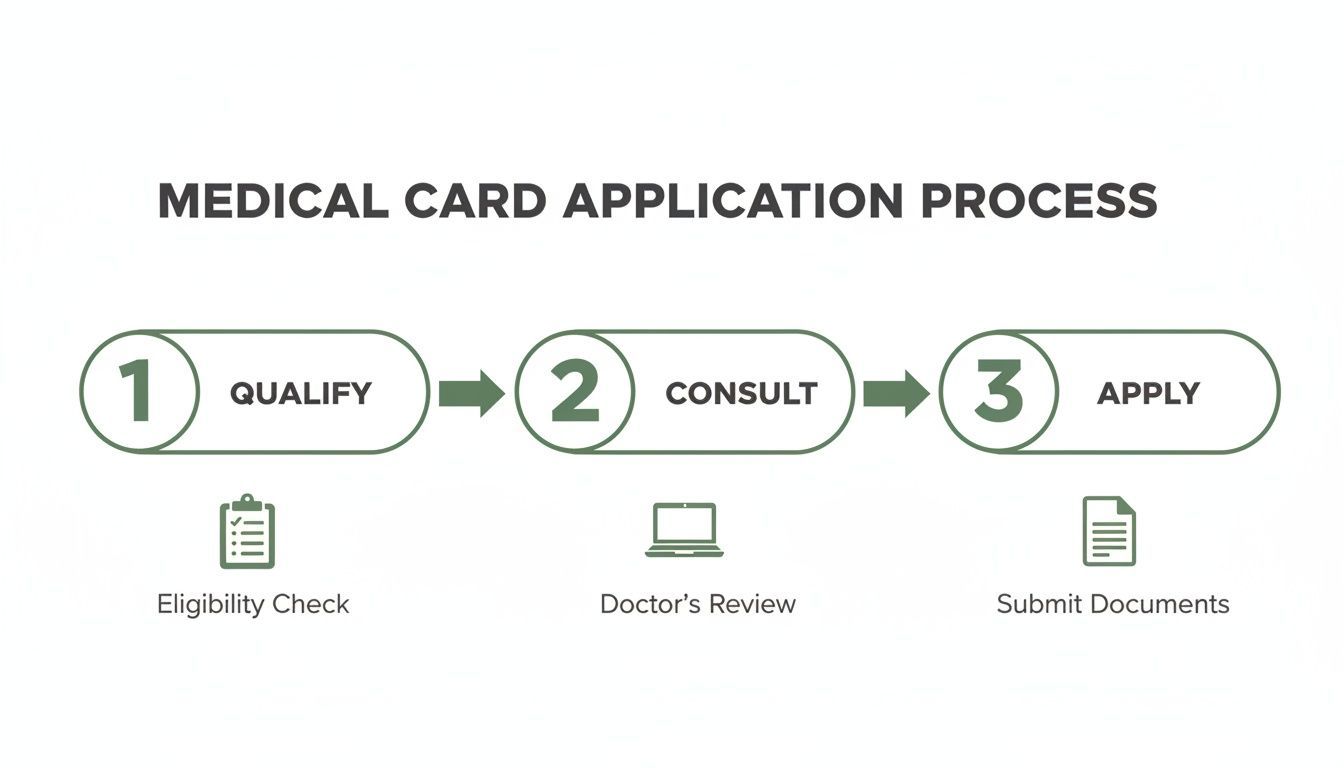
The whole process is designed to be supportive right from the start. A consultation lets a provider really understand your unique situation and see if you have a qualifying condition that could benefit from medical marijuana. If you do, they'll work with you to create a personalized care plan built around your symptoms and goals.
The process is simple:
- A Private Consultation: You’ll talk through your symptoms and health history with a provider who gets the specific pressures Mississippians face.
- Personalized Recommendations: If it's a good fit, you’ll get guidance on how medical marijuana could work within your broader recovery plan.
- Application Support: You get help with the state's application process, making it clear and simple.
Having a local provider who understands your journey is key. They become a partner in your recovery, offering guidance and follow-up care to make sure your plan is actually working. This kind of integrated approach—combining self-care with targeted medical support—can provide the comprehensive relief you need to truly overcome burnout and get your life back.
Navigating Workplace Changes and Finding Support

Sometimes, all the deep breathing and self-care in the world just won’t cut it. That's because burnout often isn't a personal failure—it’s a red flag waving from a broken system at work. When you hit this point, the only way forward is to look outward and start tackling the root causes in your environment.
This means learning to advocate for yourself and starting tough conversations about real, meaningful adjustments. It’s a shift from just surviving your workday to actively building a more sustainable one. For many Mississippians, this is also the moment to bring in professional support to help rebuild the mental and emotional strength that burnout has drained away.
Approaching Your Manager with Solutions
Talking to your boss about burnout can feel like walking on eggshells. The trick is to reframe the conversation. Instead of showing up with a list of complaints, come prepared with collaborative, solution-focused ideas. Frame it as a win-win: you’re trying to improve your well-being so you can be more effective for the team.
Before you even book the meeting, do some prep work. What are the biggest pressure points? Is it the sheer volume of work, a lack of clear direction, or feeling like you have zero control over your own tasks? Get specific. Once you’ve pinpointed the problems, you can brainstorm a few potential fixes to bring to the table.
When people feel their employer genuinely cares, it’s a game-changer. The belief that an 'employer cares about health' plummets to just 47% for employees deep in burnout, compared to 67% for those feeling good. You can read more about the connection between employee perception and burnout rates to see just how big that gap is.
Demystifying Professional Mental Health Support
Let’s be clear: asking for professional help is a sign of strength. Therapy offers a safe, totally confidential space to unpack the exhaustion and cynicism that burnout leaves behind. A good therapist won’t just listen; they’ll give you powerful tools to manage stress, enforce boundaries, and rewire those negative thought patterns.
Several therapeutic approaches are particularly effective for burnout:
- Cognitive Behavioral Therapy (CBT): This helps you spot and change the unhelpful thinking and behaviors that are feeding your burnout.
- Acceptance and Commitment Therapy (ACT): Focuses on accepting what you can't control and committing to actions that align with your values and bring you fulfillment.
- Mindfulness-Based Stress Reduction (MBSR): Teaches you mindfulness techniques to become more aware of your stress triggers and manage them before they spiral.
Think of it as learning practical, lifelong skills for navigating not just this challenge, but any that come your way.
Accessible Support for All Mississippians
It wasn't long ago that getting mental health care in Mississippi felt like an uphill battle, especially if you lived anywhere from the Delta to the Gulf Coast. Geographic hurdles made consistent care almost impossible. Thankfully, telehealth has completely changed the landscape.
Now, virtual appointments let you connect with therapists and other wellness providers right from your own home. This convenience alone removes a huge layer of stress and makes it far easier to squeeze appointments into a packed schedule. Whether you're looking for talk therapy or need a consultation for a medical marijuana card to help with related symptoms like anxiety and insomnia, telehealth is breaking down those old barriers. If you're exploring your options, this guide on the best telehealth services for mental health is a great place to start.
For some people with qualifying conditions in Mississippi, medical marijuana can be a valuable part of their recovery plan, all under a provider’s supervision. The right strains can help calm an overactive mind and promote the deep, restorative sleep that burnout so often destroys. This can create the mental breathing room you need to fully engage in therapy and other healing practices, making it a powerful piece of a comprehensive wellness strategy.
Answering Your Questions About Burnout
As you start down the path to recovery, questions are going to pop up. It's only natural. You'll wonder what to expect, how to handle specific situations, and if you're even on the right track. This is where we can clear up some of the most common concerns, especially for those of us here in Mississippi, so you can move forward with confidence.
Knowing the steps is one thing, but feeling supported and sure of your choices is what really makes the difference. Let's tackle some of those lingering questions head-on.
Is It Really Burnout or Am I Just Lazy?
This is a question so many of us secretly ask ourselves, usually loaded with a heavy dose of guilt. Let's be clear: burnout and laziness are worlds apart. Laziness is a temporary dip in motivation without any real distress behind it. Burnout, on the other hand, is a deep state of emotional, physical, and mental exhaustion caused by being under a crushing weight of stress for too long.
Think about it this way: if you used to be a motivated person but now feel completely drained, cynical, and ineffective no matter how hard you try, you aren't being lazy. You're having a legitimate, human reaction to chronic overwhelm. Accepting this is the first real step toward giving yourself the grace you need to heal.
How Long Does It Take to Recover From Burnout?
There’s no magic number here. The timeline for recovery can be anything from a few weeks to several months, or even longer. It really depends on how long you've been struggling and what kind of changes you're able to put in place.
A few things really influence how quickly you'll bounce back:
- Early Intervention: The faster you recognize what's happening and take action, the quicker you can start turning things around.
- Your Support System: Having people in your corner at home and an understanding environment at work can make a massive difference.
- Commitment to Change: Sticking with new habits, holding firm on your boundaries, and actually prioritizing self-care are non-negotiable for lasting recovery.
Recovery is almost never a straight line. You'll have good days and bad days, but patience and consistency are your best friends on this journey.
Can I Get Over Burnout Without Quitting My Job?
Yes, absolutely. While a toxic job can certainly be the main culprit, walking away isn't always the first or only answer. The trick is to shift your focus to what you can actually control in your current role.
Start by getting specific about the stressors. Is it the sheer volume of work? A lack of clear direction? Once you pinpoint the issues, you can have a much more productive conversation with your boss about possible adjustments. At the same time, you have to work on strengthening your own defenses—that means truly disconnecting after hours and weaving stress-reducing practices into your daily life. Often, making your current job more sustainable is a powerful first move.
What Role Can Medical Marijuana Play in a Burnout Recovery Plan in Mississippi?
For some people in Mississippi with qualifying conditions, medical marijuana can be a valuable part of a medically supervised wellness plan. The chronic stress that fuels burnout often spirals into severe symptoms like insomnia , persistent anxiety , and even a heightened sensitivity to pain.
Under a healthcare provider's guidance, certain types of medical marijuana can help take the edge off these debilitating symptoms. It might help you get restorative sleep when your mind is racing, or ease the constant physical tension that feeds your anxiety.
It's not a cure-all, but a supportive tool. By alleviating some of the toughest physical and emotional symptoms, medical marijuana can create the stability needed to fully engage with other recovery strategies, like therapy and lifestyle adjustments.
Here in Mississippi, the process to get a medical marijuana card is straightforward. It all starts with a consultation with a healthcare provider to confirm you have a qualifying condition and to build a care plan that’s right for you. This approach ensures its use is safe, targeted, and seamlessly integrated into your journey back to wellness.
Are you ready to take the next step in managing your health? The compassionate team at Pause Pain and Wellness is here to guide you. Learn more about personalized care plans and start your journey toward balance today. https://pausethepain.com
The post How to Deal with Burnout and Reclaim Your Balance in Mississippi appeared first on Pause Pain & Wellness.